


Restoration & decoration
Anchoring of joinery: hinges and window stops
Works
Performing hinge and window stop anchorings
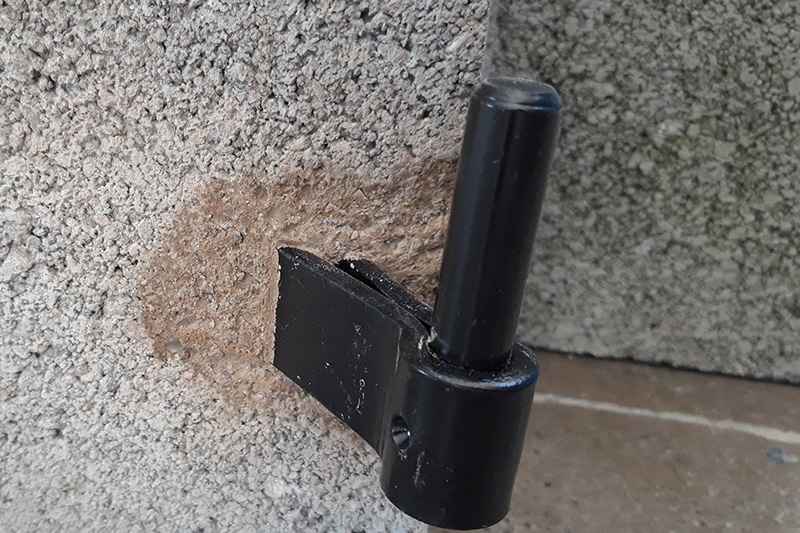
Water is often the main cause of deterioration in masonry, hinges, and window stops. When it infiltrates and freezes, the masonry around hinges and window stops can crack.
Additionally, the weight of the window itself adds to the problem, and soon the window is at risk of being torn off by even a mild gust of wind.
Solution
PROMPT Natural cement is a hydraulic binder that complements common binders like lime and cement. In addition to enabling a rapid return to service on both old and new masonry supports, the unique properties of natural PROMPT cement provide excellent adhesion and aesthetic results. The mortar can even be colored!
Durability is also a major advantage of natural PROMPT Vicat cement. In just 15 minutes, it's possible to achieve 4 MPa!
For further information:
Technique
First and foremost, carefully prepare the support: protect the woodwork and windows to avoid soiling them, screw the anchor plates onto the woodwork, create the necessary anchoring holes with proper coverage in mind, and then dust and dampen the support.
Next, create the mortar using PROMPT natural cement, dry sand, and TEMPO retarder if needed. Homogenize the mixture while adding water until a plastic consistency is obtained.
Finally, for implementation, dampen the support, place the shims, adjust for plumb, and install the mortar, ensuring proper coverage of the parts to be anchored (hinges, window stops).
Appropriate equipment is essential for carrying out this type of work.
Half an hour after setting is complete, the windows can be put back into service.
Fields of application

Natural PROMPT Vicat cement is used on both old and new masonry supports for tasks such as anchoring window hinges and window stops.
Advantages of its application
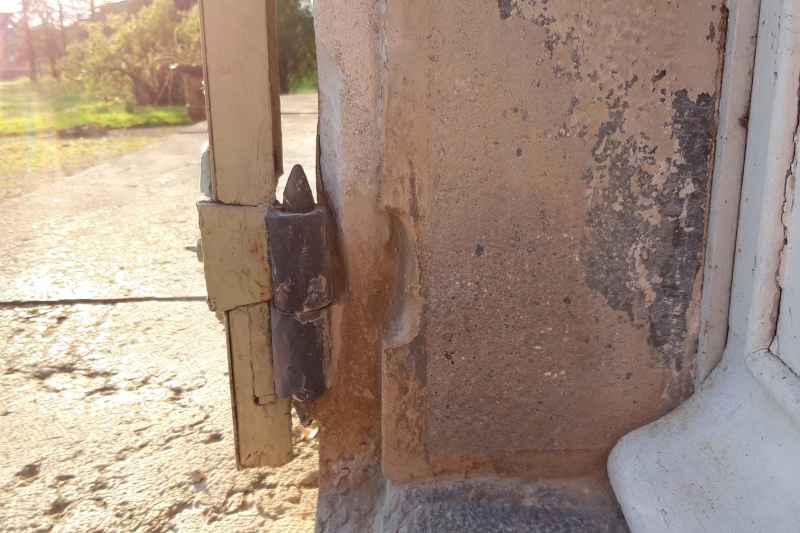
Natural PROMPT cement has multiple advantages for the installation of hinge and shutter stop fixings. Thanks to its quick setting and hardening, the fixing is immediate, and the shutters can be put back into service very rapidly. Its initial strengths are high, and natural PROMPT cement provides excellent adhesion to all types of surfaces. Additionally, natural PROMPT cement allows for work in cold weather. It is also aesthetically pleasing, as the mortars can be colored.
Advices
Be aware that the setting time of natural cement can be adjusted using the TEMPO retarder. With it, the rapid setting of natural PROMPT cement can be controlled. This ease of use allows for optimal application and execution, ensuring high-quality work and results. Depending on the temperature and dosage, the setting time can be adjusted from a few minutes to over an hour.
Jobsite questions
The hinge pintle is the metal fitting sealed into the wall that allows the shutter to pivot. The shutter stop (or wind stay) is a separate fitting, also sealed into the wall, that holds the shutter in the open position to prevent it from slamming or being torn away by the wind. Both fittings are subject to the same water infiltration and frost stresses, and are sealed using the same technique with PROMPT natural cement.
The chase depth must allow sufficient mortar cover around the fixing strap over its full length — at least 1 to 2 cm of mortar around the metal fitting on each side. A chase that is too shallow creates a weak point: the mortar may crack or debond under the shutter's weight. It is advisable to cut the chase slightly wider than the strap to ensure uniform filling.
Yes. PROMPT natural cement adheres to all types of masonry substrate: natural stone (limestone, tufa, granite, etc.), brick, concrete block and concrete. Substrate preparation remains the same: carefully dust the chase, remove any friable material, then dampen before applying the mortar.
The rapid setting of PROMPT natural cement is very sensitive to the water content of the mix: damp sand introduces uncontrolled water into the batch and disrupts the water/cement ratio, which can unpredictably shorten the open time. Using dry sand allows precise control of the amount of water added and produces a uniform, workable consistency.
Shims placed during installation are essential to hold the pintle in position and maintain plumb during setting. They must be positioned before applying the mortar, the vertical alignment precisely adjusted, then the fittings left undisturbed until setting is complete. Thanks to the rapid setting of PROMPT natural cement, this immobilisation time is short — from a few minutes to one hour depending on the TEMPO dosage.
Chemical anchors (epoxy or polyester resin) are suited for fixing threaded rods in dense substrates such as concrete or solid brick. For hinge pintles in historic stone or rubble masonry, PROMPT natural cement offers several advantages: compatibility with porous and irregular substrates, an ochre hue that blends visually with the masonry, and ease of reworking if needed. Chemical anchors remain appropriate for reinforced concrete or very dense substrates.
Yes, for certain specific applications. The pure paste (natural Prompt cement mixed with water without sand) is used for sealing in wet zones, for water inflow stoppage, or for filling very small volumes. For standard sealing of hinges, shutters or posts, the mortar dosed at 1 volume of Prompt to 1 volume of dry sand remains the recommended formulation for its better mechanical properties and ease of implementation.
For a standard sealing (shutter hinge, stake, street furniture), light return to service is possible from the end of setting, i.e. 15 to 30 minutes after application depending on the temperature. For sealings subjected to heavy loads or repeated mechanical stresses (fence posts, handrails), it is recommended to wait at least 24 hours. At low temperature (close to +5 °C, lower limit of recommended application), these times must be lengthened.
The reference dosage for a sealing mortar is 1 volume of natural Prompt cement to 1 volume of dry 0/4 sand, with water added until a firm and plastic consistency is obtained. The sand must be dry: a damp sand brings unmastered water and disrupts the water/cement ratio, which shortens the open time unpredictably. For sealings in damp or submerged environments, double the Prompt dose (2/1 volume dosage) to reinforce the watertightness.
Achievements
Discover our realized projects


Product

Discover everything about PROMPT natural cement
The only cement with strengths at the end of setting, it allows for the quickest return to service. In formulations, it also acts as a powerful accelerator for all hydraulic binders (lime, Portland cement, calcium sulfoaluminate cement, calcium aluminate cement).