


Quick masonry
Lintels, jambs, and window sills
Works
Creating lintels, jambs, and window sills cast in place
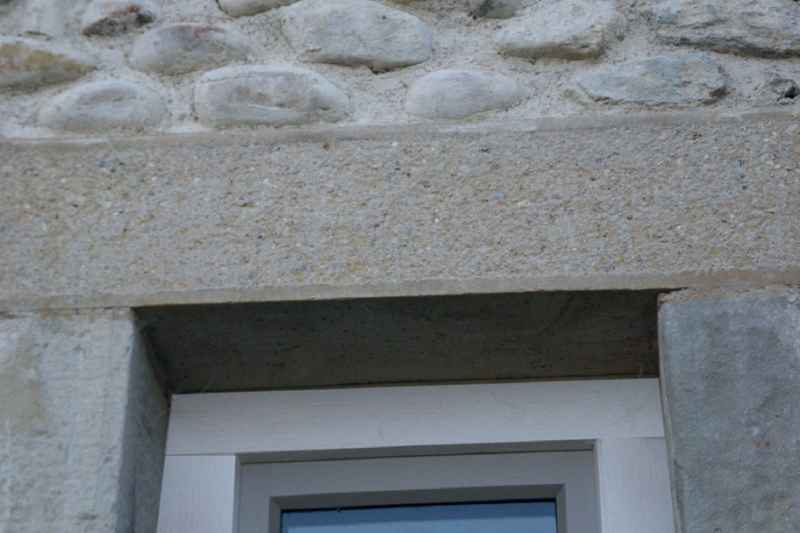
On renovation sites, concrete is the ideal material for creating cast-in-place lintels, door and window jambs, and window sills. Indeed, on such sites, using precast lintels, jambs, or window sills is not feasible. Thus, it is necessary to pour concrete on-site.
Pour aller plus loin :
Solution
PROMPT natural cement enables rapid formwork removal for lintels, door and window jambs, and window sills. Thanks to its quick setting time, formwork removal can occur as soon as one hour after pouring. Moreover, various textures (smooth, textured, bush-hammered, polished) and different shades are achievable, whether the substrate is new or old.
Technique
Before preparing the PROMPT natural cement mortar, ensure the substrate is properly prepared. Provide suitable metal reinforcement, as with regular cement concrete works. Oil or wax the formwork, as this will affect the appearance of the concrete once it's removed.
For placement, position the reinforcement, pour, and vibrate the PROMPT natural cement concrete prepared in a mixer or concrete mixer (PROMPT natural cement, sand or aggregate, TEMPO, water).
For formwork removal, wait around 1 hour for the sides and 2 hours for the undersides of lintels or window sill formwork.
What is the formwork removal time for lintels, jambs, and window sills?
Thanks to its rapid setting time, lintels, jambs, and window sills made with Natural Prompt Cement can be stripped quickly. This helps save time on site and speeds up the construction process.
You can remove the side forms after just 1 hour, and the soffits of lintels or the formwork for window sills after 2 hours.
Advices
For large lintels, loading can be done after 3 hours. Depending on the span, supporting props must be put in place for 3 weeks.
Benefits of its application
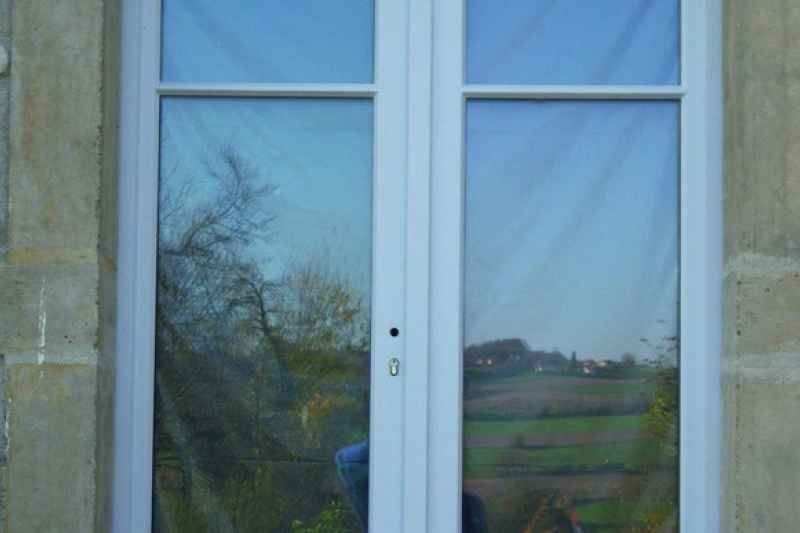
Using Vicat PROMPT natural cement concrete to create cast-in-place lintels, jambs, and window sills allows for :
- Quick return to service
- Cost-effective solution
- Suitable aesthetics: color and texture
- Adjustable setting time
Applications
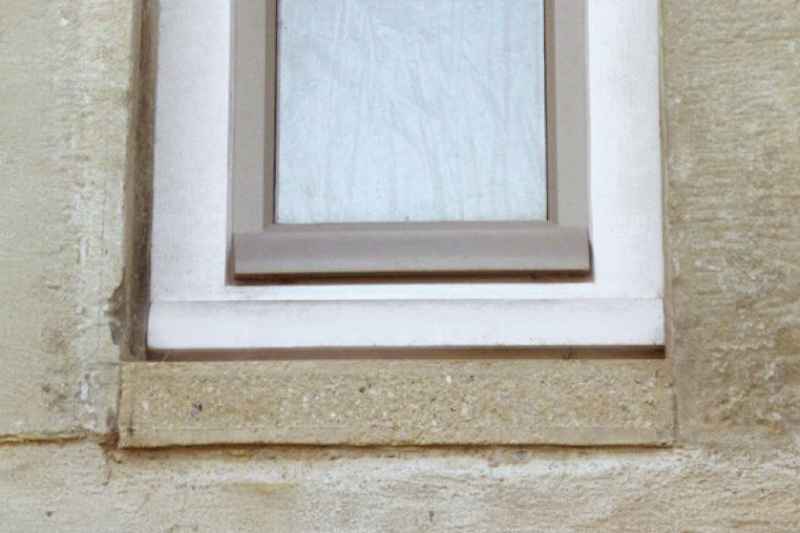
The use of Natural Prompt Cement is perfectly suited for the construction of:
- Lintels
- Jambs
- Window sills
- Door thresholds
Jobsite Questions
Yes, reinforcement is essential. A lintel is a load-bearing element subject to bending forces: without steel reinforcement, even a very strong mortar will fail under load. The reinforcement must be sized according to reinforced concrete design rules, taking into account the span and the loads carried. For wide-span lintels or those bearing significant loads, a structural engineering assessment is recommended.
For spans below approximately 1 m, formwork can be removed quickly thanks to the rapid setting of PROMPT natural cement. Beyond 1 m, supporting props must remain in place for at least 3 weeks to allow full hardening before the lintel takes on its design loads. For large spans or heavy loads, a prior structural assessment is required.
Vibration eliminates air bubbles trapped during pouring and ensures uniform filling around the reinforcement. Without vibration, porous zones (honeycombing) form and compromise the steel cover. With PROMPT natural cement, vibration must be carried out immediately after pouring, as the rapid setting does not allow time for subsequent reworking.
These three elements form the frame of a wall opening. The lintel is the horizontal piece above the opening that carries the loads from the masonry above. The jambs are the vertical sections forming the sides of the frame. The window sill is the horizontal piece at the bottom of the opening, slightly inclined outward to ensure rainwater run-off.
dddqsdjgklmqsdgjqgjdfYes, this is one of its preferred applications. The naturally ochre hue of PROMPT natural cement is visually compatible with limestone, tufa and old brick, without creating the aesthetic discontinuity that grey Portland concrete would produce. Its mineral composition is also close to that of most regional stones, promoting compatibility with historic substratesYes, this is one of its preferred applications. The naturally ochre hue of PROMPT natural cement is visually compatible with limestone, tufa and old brick, without creating the aesthetic discontinuity that grey Portland concrete would produce. Its mineral composition is also close to that of most regional stones, promoting compatibility with historic substrates
Yes. The mortar shade can be adjusted by choosing the appropriate sand and adding natural mineral pigments to the mix. The surface texture can also be modified depending on the type of formwork used. A test sample is recommended before on-site production to validate the final shade.
PROMPT natural cement lintel concrete consists of PROMPT natural cement, 0/4 sand, 5/10 or 5/15 aggregate and water, with the addition of TEMPO retarder to facilitate placement. The water/cement ratio must be carefully controlled: excess water reduces the final strength. The online calculator provides precise mix proportions based on the desired consistency and volume.
Yes, provided minimum conditions are met: temperature above 2°C, non-frozen substrate, no risk of frost in the hours following pouring. Below this threshold, setting is inhibited. In extreme heat (above 30°C), it is advisable to use cold water and to work with aggregates stored in the shade.
Achievements
Discover our realized projects


Product

Discover everything about PROMPT natural cement
The only cement with strengths at the end of setting, it allows for the quickest return to service. In formulations, it also acts as a powerful accelerator for all hydraulic binders (lime, Portland cement, calcium sulfoaluminate cement, calcium aluminate cement).