


Restoration & decoration
Reconstruction of the roof overhangs of the former De Montel Stables in Milan
Overview
The roof overhangs of the former De Montel Stables in Milan
History
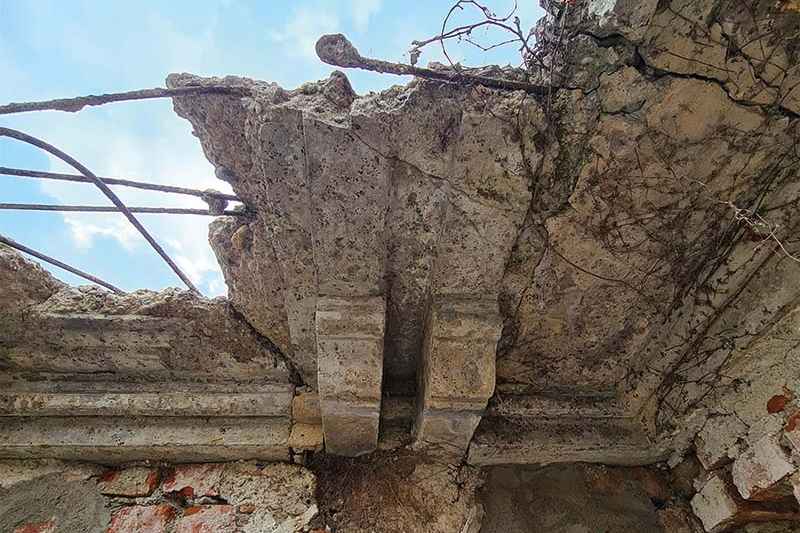
In the reconstruction project of the cornice of the former De Montel Stables in Milan, the design phase involved an accurate mapping of the existing conditions, with the updating of surveys and executive drawings followed by 3D modelling of the missing elements.
PROJECT
Each component was custom-designed, distinguishing between onsite reintegration works and new prefabricated elements, with tailored solutions based on structural conditions and load requirements.
The production of the new elements followed the “weton-wet” technique using layered and lightweight mortars, ensuring high performance, weight reduction, and perfect integration with the historic fabric. On-site installation, the use of dedicated anchoring systems, and local integrations ensured structural continuity, execution accuracy, and material and aesthetic coherence with the existing building.
Restoration stages
La technique
Each element of the cornice was custom-designed to integrate perfectly with the existing structure, taking into account the different geometric and structural conditions of the missing parts (single elements for linear sections, double elements for higher load areas, special elements for joints and curved details, and reduced 30% elements for partial integrations). A differentiated reinforcement design was also developed, with variable positioning and sizing according to the structural requirements of each element, in agreement with the Works Supervisor.
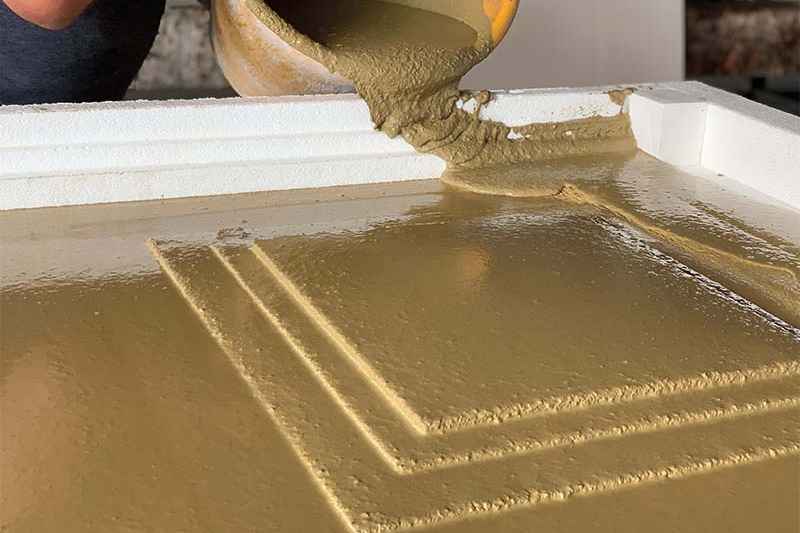
The engineering of the material and production process involved engineers, chemists, restorers, and craftsmen, starting from the analysis of the original artefact carried out by CNR Milan, Politecnico di Milano, and the Italian Institute of Concrete. A two-layer thixotropic mortar system was developed using a “wet-on-wet” technique: an aesthetic layer in contact with the EPS® mould, containing a part of Prompt, and a structural layer in HTE® Microbeton, fibrereinforced and lightweight, with steel reinforcement embedded between the two layers, respecting the required concrete cover.
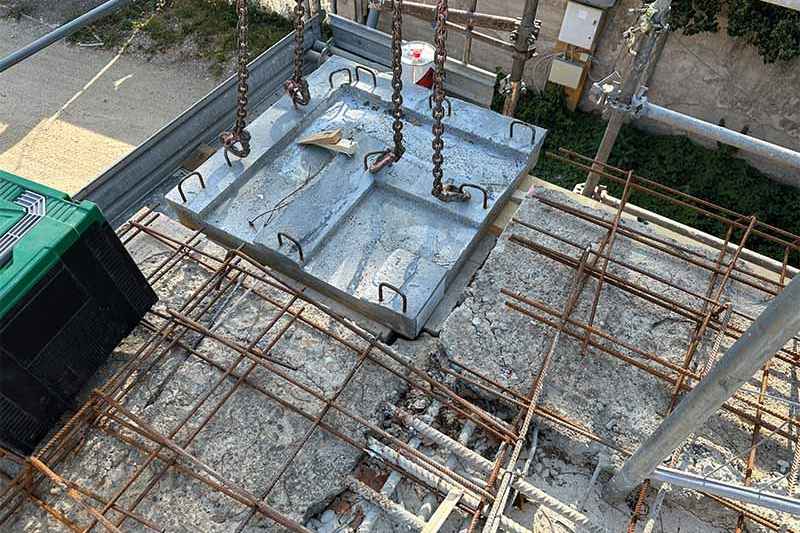
The production and installation phase included single, double, special, and reduced elements, with optimized weight (approximately 170 kg compared to the original 650 kg). After demoulding, surface finishing and protective treatments were applied. Transport and installation at height were carried out using cranes and dedicated anchoring points, with verification of joints, micro-adjustments, and final fixing using structural resin.
The elements were then underfilled with grout to ensure continuity with the existing structure and preparation for the subsequent concrete topping. Reinforcements were left exposed to connect with the following structural framework, ensuring the correct “suspension” of the cornice and the structural and material continuity of the intervention.
In this process, natural cement represented:
- the initial and sensitive component of the mix, the most “active” layer of the mortar applied in contact with the EPS® mould;
- the aesthetic skin of the element, defining its colour, texture, and final material appearance;
- the key factor governing visual compatibility with the historic fabric, thanks to controlled pigmentation and formulation;
- the primary interface between mould and material, responsible for capturing geometry and reproducing surface detail.
Finalized project
Key information
The project took 3 years.
Stakeholders
Owner
General Contractor: Techbau S.p.a (Febbraio 2022 – Gennaio 2023)
Impre.DO S.P.A. Unipersonale (Gennaio 2023 – Marzo 2025)
Architect
J+S S.p.a.
Contractor
Breraut Restauri SRLS


Discover

Discover our product
Derived from a unique deposit located in the Chartreuse massif, PROMPT natural cement is an exclusive product of the Vicat Group.
Documentation
Find all our brochures, project sheets, application sheets and video tutorials.